Fewer Alerts, Better Security
A SIEM or DLP platform that cries wolf gets ignored. How I have designed, deployed and tuned detection so people trust it again.
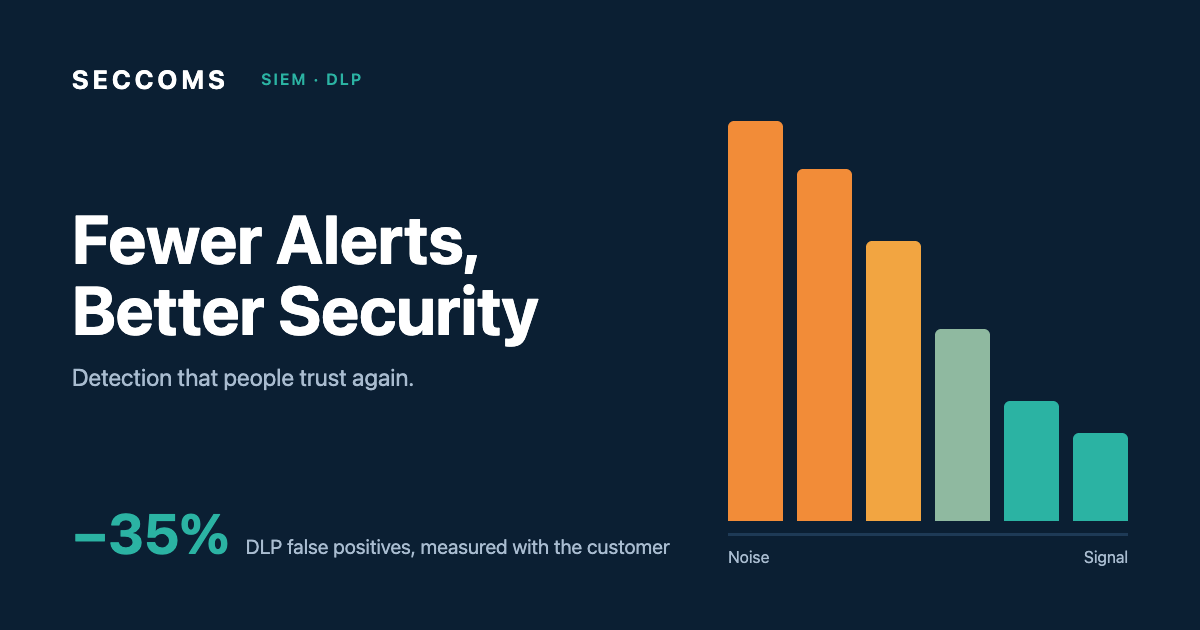
Most security teams don't have too few alerts. They have too many. When analysts face hundreds of meaningless alerts a day, the real one gets missed. Tuning is not housekeeping. It is a security control.
I have worked on detection platforms from both ends: designing them from scratch and fixing them after the fact.
Building a SIEM end to end
For a major UK retailer I led an entire SIEM programme as Architectural Consultant and Delivery Head. I designed the solution, ordered the servers, deployed and tested it, then handed it over to the business.
Owning the whole lifecycle matters. The decisions made at design stage, such as which log sources to take and how to normalise them, decide how noisy the platform will be for years.
Cutting DLP false positives by 35%
At a European financial services firm, our Symantec DLP work reduced false positives by 35%. That figure was measured jointly by the DLP architect and the customer, not estimated by us.
The method was not magic. Review what fires, understand why, refine the policies and test again. Repeat until the alerts mean something.
Context beats volume
On a recent engagement for a travel company, the problem was alerts raised whenever systems were accessed from outside the UK. For a travel business, staff and partners overseas are normal. The rule was technically right and practically useless.
I reviewed the high volume of events and improved the logic so that expected access stopped flooding the queue. Good detection reflects how the business actually works.
What I look for when tuning
- Rules with no owner. If nobody acts on an alert, ask why it exists.
- Business context. Travel, shift patterns and outsourced teams all change what "normal" looks like.
- Measured results. Agree how improvement will be measured before you start.
- Clean handover. The team that runs the platform must understand every change.
Drowning in alerts? Let's get your SIEM or DLP back under control.